
Our Short List of 3

- Best for: Backpackers with one or two past rolls who want tape-level control they can adjust on the trail.
- Brand: Med Spec
- Material: Nylon boot with CoolFlex padding and tongue
- Straps: Figure-8 stabilizing straps with elastic cuff closure
- Fit: Bilateral, fits left or right foot
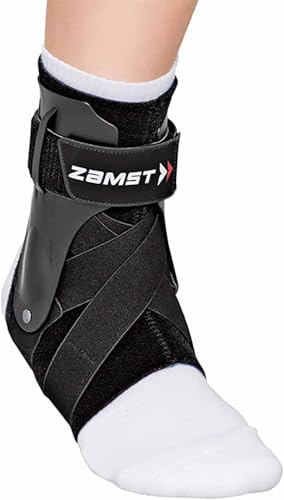
- Best for: Backpackers with a genuinely unstable ankle who need rigid roll control on talus, roots and off-camber tread.
- Brand: Zamst
- Model: A2-DX (model number 4706)
- Size and side: X-Large, right foot
- Color: Black

- Best for: Backpackers who hate lace-up routines and want shell support that stays out of the way on easy tread.
- Brand: DonJoy Performance
- Size and side: Small, right foot
- Color: Black
- Shell: Anatomically molded TPU shell with EVA lining
All 4 Picks at a Glance
| Product | Specs | Action |
|---|---|---|
| Med Spec ASO Ankle Stabilizer |
| Check price on Amazon |
| Zamst A2-DX Ankle Brace |
| Check price on Amazon |
| DonJoy Performance POD Ankle Brace |
| Check price on Amazon |
 Bauerfeind Sports Ankle Support |
| Check price on Amazon |
Key takeaways
- Five ankle braces for backpacking compared, from a figure-8 lace-up to a rigid guard brace, with boot-fit checks, sizing notes and listing specs.
Backpacking changes the ankle brace decision because the load never comes off. A heavy pack raises the force behind every misstep, descents last for hours instead of minutes, and a brace that feels fine on day one has to stay comfortable on day four, inside the same boots, over socks that are not getting any cleaner. Support level, bulk and how the brace handles a swollen end-of-day ankle matter more than they do on a day hike.
This roundup serves three kinds of backpackers: those protecting an ankle that has rolled before, those rebuilding confidence after a recent sprain, and thru-hikers who want light insurance they can wear for weeks. The five picks cover a figure-8 lace-up, a rigid guard brace, a low-profile strap system, a step-into shell and a compression knit, each chosen from the product names and specification details published on its Amazon product page.
Quick Picks
As an Amazon Associate we earn from qualifying purchases.
| Product | Best for | Key spec from title |
|---|---|---|
| Med Spec ASO Ankle Stabilizer | Repeat rollers who want tape-like support under a full pack | Figure-8 stabilizing straps |
| Zamst A2-DX Ankle Brace | The weakest ankles on rough, off-camber descents | Dual molded guard stabilizers |
| BioSkin TriLok Ankle Brace | Support that still fits inside close-fitting boots | FootLok arch-lift strap |
| DonJoy Performance POD Ankle Brace | Fast on-and-off at camp without laces to manage | Molded TPU shell |
| Bauerfeind Sports Ankle Support | Mild instability and end-of-day swelling on long miles | Figure-8 taping strap |
How to Choose
Match support to your sprain history, not the scenery
Start with your own record. If your ankles have never rolled, a compression knit or a light strap brace is usually enough for loaded miles, because its job is feedback and mild control rather than restraint. One or two past rolls point to figure-8 strapping, which locks the heel and resists the inward roll that causes most trail sprains. Repeated rolls, or a sprain from earlier this season, call for rigid guards or a molded shell, and for a conversation with a clinician before a long trip rather than after one.
Weigh the brace against your base weight
Backpackers count ounces because everything rides on the same two ankles. A rigid guard brace can weigh several times as much as a knit support, and you may carry a second brace as a spare or wear one on each ankle. Check the listed item weight for the exact size you need, and remember that a brace worn on the foot is not free either: heavy, stiff support changes your stride over a long day. The right trade is the lightest brace that still controls the roll you are actually worried about.
Test the fit inside your backpacking boots
A brace and a mid-cut boot compete for the same space. Lace-up braces spread pressure along the tongue and usually sit flattest, while rigid guards add width exactly at the ankle bones, where boot collars press. Step-into shells and knit supports sit lower and slimmer. Whatever you choose, wear it in your boots with your hiking socks on a loaded practice walk before the trip. Check for hot spots above the ankle bone, heel lift on climbs and pinching at the Achilles, and size the brace by the maker’s ankle measurement rather than your shoe size.
Plan for swelling, washing and multi-day wear
Ankles swell as the miles stack up, so a brace that only fits a fresh morning ankle will fight you by evening. Adjustable straps and rear fasteners let you ease tension without removing your boots at every break. Multi-day trips add a second problem: a brace worn against skin for a week needs to dry overnight and tolerate hand washing in a creek-side basin. Check the care instructions on the listing, favor designs you can open fully to dry, and consider a thin liner sock under the brace to cut friction and odor.
The 5 Best Options
Med Spec ASO Ankle Stabilizer
- Best for: Backpackers with one or two past rolls who want tape-level control they can adjust on the trail.
- Brand: Med Spec
- Material: Nylon boot with CoolFlex padding and tongue
- Straps: Figure-8 stabilizing straps with elastic cuff closure
- Fit: Bilateral, fits left or right foot
Backpackers with one or two past rolls who want tape-level control they can adjust on the trail.
Sizing runs by ankle circumference and the sizes are sold as separate listings, so confirm the exact size variant on the page before ordering.
The ASO is the brace trainers reach for, and its figure-8 straps explain why: they cross under the heel and lock the ankle down the way a good tape job does, but they can be re-tensioned at a trail break instead of being cut off at night. The nylon boot is low profile enough to slide into most hiking boots, the CoolFlex tongue and padding soften the lace pressure over long climbs, and the bilateral design means one spare covers either foot. For a backpacker with a known weak side, it is the most proven middle ground between a sleeve and a rigid guard.
Zamst A2-DX Ankle Brace
- Best for: Backpackers with a genuinely unstable ankle who need rigid roll control on talus, roots and off-camber tread.
- Brand: Zamst
- Model: A2-DX (model number 4706)
- Size and side: X-Large, right foot
- Color: Black
Backpackers with a genuinely unstable ankle who need rigid roll control on talus, roots and off-camber tread.
The brace is side-specific and size-specific, so the listing linked here is one side in one size; the wrong side is unusable, and the guards add width inside snug boots.
Zamst rates the A2-DX as its strongest ankle support, built for moderate to severe sprains, and the construction backs that up: dual molded Exo-Grid guards brace the ankle against rolling inward or outward, X-Strap stabilizers add a figure-8 wrap plus forward-shift control, and an upper anchor strap addresses high ankle sprains. The rear i-Fit fasteners let you tune compression without re-lacing, which matters when a swollen ankle needs relief at mile fifteen. It is the bulkiest pick here, so it suits a known problem ankle on rough routes rather than everyday insurance.
BioSkin TriLok Ankle Brace
The TriLok takes a different route to control: a three-component system pairs a compression sleeve with a FootLok strap that lifts and supports the arch, plus figure-8 stabilization, so the brace works on the foot mechanics behind many rolls instead of only blocking the ankle itself. At seven ounces with a slim, streamlined shape, it disappears into boots that would reject a rigid guard, and the listing notes it fits comfortably within most footwear. The materials carry an OEKO-TEX Standard 100 certification on the page, a plus for a brace worn against skin for a week straight.
Specs
- Brand: BioSkin
- Model number: 53603
- Size: Large
- Design: Three-component system with FootLok arch-lift strap and figure-8 stabilization
- Item weight: 7 ounces
- Dimensions: 9.1 x 5.9 x 2 inches
- Material: not stated
- Certification, per listing: OEKO-TEX Standard 100 certified components
Best for: Backpackers whose rolls start with a collapsing arch or tired feet late in the day, and anyone with close-fitting boots.
Watch out for: The maker stresses measuring your ankle and watching the application guidance before ordering, because the strap routing has to be correct for the support to work.
ASIN: B006XK3GAW
DonJoy Performance POD Ankle Brace
- Best for: Backpackers who hate lace-up routines and want shell support that stays out of the way on easy tread.
- Brand: DonJoy Performance
- Size and side: Small, right foot
- Color: Black
- Shell: Anatomically molded TPU shell with EVA lining
Backpackers who hate lace-up routines and want shell support that stays out of the way on easy tread.
It fits one foot only and comes in separate size listings, so verify both the side and the size on the page; the shell also needs a boot with enough instep room for the underfoot closure.
The POD replaces laces and straps with a step-into design: an anatomically molded TPU shell with a soft EVA lining and an adjustable underfoot closure that integrates between foot and shoe. DonJoy calls the system Protection On Demand, meaning the shell is shaped to engage when the ankle starts to roll rather than locking the joint all day, which suits backpackers who find constant restraint fatiguing. The low-profile cuff keeps the top edge from fighting a boot collar. It is side-specific, so the spare problem is real, but for one problem ankle it is the fastest brace here to put on with cold morning hands.
Bauerfeind Sports Ankle Support
- Best for: Backpackers with no sprain history who want light compression and proprioceptive feedback over very long miles.
- Brand: Bauerfeind
- Variant: Navy, right foot, size S
- Strap: Figure-8 taping strap
- Compression: Targeted compression knit
Backpackers with no sprain history who want light compression and proprioceptive feedback over very long miles.
A knit support will not stop a true roll the way a guard or figure-8 lace-up can, and the sizes are side-specific listings, so check the chart against your ankle measurement.
Bauerfeind’s knit support is the lightest-duty pick, aimed at ankles that ache, swell or feel vaguely unreliable rather than ankles that fold. The targeted compression knit is paired with a figure-8 taping strap you can cinch for descents and slacken on the flats, so support rises and falls with the terrain instead of staying locked at one level. A knit brace also packs flat, dries fast after a basin wash and doubles as a camp and travel support on the way to the trailhead. For strong ankles that simply get tired under a pack, it adds feedback without changing how your boots fit.
Which One Fits Your Situation
You have rolled the same ankle more than once
Start with the Zamst A2-DX if your boots have room for its guards, because repeated rolls need structure that does not depend on strap tension alone. If the guards will not fit your footwear, the Med Spec ASO is the fallback: its figure-8 straps give the strongest soft-brace control here, and it has a long record in exactly this role.
You are returning to the trail after a recent sprain
Choose between the ASO and the TriLok based on where your support failed last time. The ASO locks the heel and resists the roll directly. The TriLok adds arch support under the foot, which helps when fatigue and a collapsing arch set the roll up. Either way, build distance gradually and treat the brace as one part of the return, not the whole plan.
Your ankles are sound but swell and ache by day three
The Bauerfeind Sports Ankle Support fits this pattern best: compression for the swelling, a strap you can tighten only for the descent, and nothing rigid to rub over a week of walking. If the aching comes with tired arches, the TriLok’s FootLok strap is the step up to consider instead.
You want one brace that disappears in the pack
The DonJoy POD steps in without a lace routine and its shell carries the support, so it works as a just-in-case brace for a partner or a spare for the group. The Bauerfeind knit packs even flatter, but it is a compression support rather than a roll stopper, so pick based on the job you actually need done.
Common Mistakes
- Buying by shoe size when the maker sizes by ankle circumference, which puts the straps and guards in the wrong place.
- Testing a brace in trail runners at home, then discovering it does not fit inside higher, stiffer backpacking boots.
- Choosing maximum rigidity for a sound ankle, then abandoning the brace at the first hot spot two days in.
- Wearing a brace for the first time on the trip itself instead of on loaded practice walks beforehand.
- Packing no way to wash or dry the brace, so by mid-trip it is stiff, salty and rubbing.
Frequently Asked Questions
Can I wear an ankle brace inside my backpacking boots all day?
Yes, provided the combined volume of brace, sock and foot still lets your heel sit locked and your toes move. Lace-up and knit designs sit flattest; rigid guards need the most room. Wear the full combination on a loaded practice walk first, and loosen straps at breaks, because a brace that is tolerable for an hour can still rub at hour seven.
Should I wear a brace on both ankles or just the weak one?
Most backpackers brace the ankle with a sprain history and leave the sound side free, since support changes stride and adds weight. Bilateral designs like the ASO make a single spare more useful. If both ankles have rolled before, bracing both is reasonable, but step the support level down one notch from what you would choose for a single bad ankle.
How do I keep a brace from rubbing on a multi-day trip?
Fit is most of it: correct size, straps snug rather than cranked, and a thin liner sock underneath to move the friction layer off your skin. Open the brace fully each night so it dries, rinse it when water allows, and address any hot spot the morning it appears rather than wrapping it and hoping, because a small rub becomes a trip-ending blister fast.
Does an ankle brace replace ankle strengthening?
No. A brace controls motion and adds feedback while you wear it, but it does not rebuild the strength and balance reactions that prevent the next roll. Use the brace for loaded miles and rough descents, and treat balance and calf work as the long-term fix. If rolls keep happening despite a brace, that pattern is worth a clinician’s assessment before your next long trip.
More from Amazon
Programs that pair well with the guide above. Offers and eligibility are set by Amazon and may change.
Set up recurring deliveries of everyday items on eligible products. Terms and savings are set by Amazon.
Explore Subscribe & SaveCollect the home and kitchen items you want in one registry that guests can shop from.
Create a wedding registryFree shipping on eligible items, Prime Video and more. Eligible new members can start with a free trial.
Start a Prime free trialAudiobooks and podcasts to listen to on the go. Eligible new members can start with a free trial.
Try Audible freeAs an Amazon Associate we earn from qualifying purchases.


Write Your Review
No reviews yet. Be the first to share your experience!