

Key takeaways
- Compare five foam rollers for back pain relief by length, density and texture, from a soft 36-inch roller to a firm textured grid, with listing specs.
The real decision with a foam roller for an aching back is not which brand to buy, but how much pressure your back can comfortably take and how much of it you want to cover in one pass. A roller that is too firm or too short turns a relief routine into something you brace against, while the right length and density let you relax onto the spot that feels tight.
This roundup covers five distinct approaches for different backs and routines: a long smooth roller for lying along the spine, a soft-density roller for sensitive backs and beginners, two textured grid rollers for firmer pressure, and a compact medium-density roller for targeted spots. The picks come from product names and specifications published on the Amazon pages, so you can match each roller to your routine before ordering.
Quick Picks
As an Amazon Associate we earn from qualifying purchases.
| Product | Best for | Key spec from title |
|---|---|---|
| TriggerPoint GRID 2.0 Foam Roller | Rolling the whole back with firm, textured pressure | 26-inch length |
| Amazon Basics High-Density Foam Roller | Lying along the spine on a long, smooth surface | 36-inch length |
| OPTP PRO-Roller Soft Density Foam Roller | Sensitive backs and first-time foam rolling | Soft density |
| TriggerPoint CORE Foam Roller | Moderate pressure in a versatile mid size | 18-inch length |
| 321 STRONG Foam Roller | Targeted knots and small spaces | Medium density |
How to Choose
Length decides how much of your back you can cover
Length is the first filter, because it decides which back routines are even possible. Rollers around 12 to 13 inches suit targeted work on one spot at a time, such as beside a shoulder blade. An 18-inch roller covers most muscle groups and is easier to control. A 26-inch roller spans the width of most backs, so you roll side to side without the ends digging in. A 36-inch roller is long enough to lie along lengthwise, supporting the full spine during gentle opening stretches.
Density controls how the pressure feels
Density is the comfort dial. Soft-density foam gives under your body weight, which suits sensitive backs, beginners, and slow routines where you want to breathe and relax onto the roller. Medium density is the middle ground most people can use daily. Firm and high-density rollers push back harder and reach deeper into tight tissue, but on a tender back they can make you tense up, which works against the point of rolling. If you are unsure, start softer and move up later.
Smooth or textured surface
A smooth roller spreads pressure evenly across a wide area, which feels predictable and is easier to control along the back. Textured rollers use zones of different shapes and heights to vary the pressure, with flatter areas acting like a palm, raised tubes acting like fingers, and firm points acting like fingertips. That variation helps when a smooth roller slides over a knot without engaging it. The trade-off is intensity: pronounced projections feel strong on bony areas such as ribs and shoulder blades.
Core construction and weight limit
Construction decides how long the roller keeps its shape. Hollow-core rollers wrap foam around a rigid tube, which holds firmness well and supports higher weight limits, up to 500 pounds on the GRID models listed here. Solid foam rollers rely on the foam itself; expanded polypropylene is very firm and light, while EVA foam is the material used in most soft and medium rollers and wipes clean because it is closed-cell. Check the stated weight limit, since exceeding it flattens any roller over time.
The 5 Best Options
TriggerPoint GRID 2.0 Foam Roller

The GRID 2.0 stretches the original GRID concept to 26 inches, so it spans the full width of most backs and stays stable while you roll between the shoulder blades and the mid back. Its multi-density surface mixes flat zones, tubes, and firm points, which vary the pressure as you move instead of pressing one uniform line. The rigid hollow core keeps that firmness consistent and supports up to 500 pounds, so it suits households where one roller gets shared. Pick it if your back stiffness is broad rather than one small knot.
Specs
- Length: 26 inches
- Dimensions: 25.98 x 5.51 x 5.51 inches
- Material: Multi-density EVA foam over a rigid hollow core
- Density: Firm
- Weight limit: 500 pounds
- Warranty: 1 year
- Color: Black
Best for: Rolling the full width of the upper and mid back with firm, varied pressure.
Watch out for: The firm surface can feel intense on a tender back, so start with short sessions and keep the pressure on muscle rather than on the spine itself.
ASIN: B006GUC9KC
Amazon Basics High-Density Foam Roller
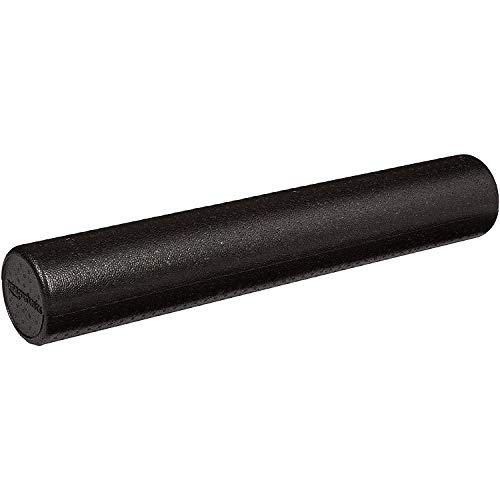
This is the longest and simplest roller in the roundup: 36 inches of smooth, high-density polypropylene foam with no texture and no moving parts. That length lets you lie along it lengthwise for gentle spine-supporting stretches, or roll across the full back without repositioning. The smooth surface spreads pressure evenly, which many people find easier to control than projections when they are starting out. It sits in the entry tier of the category, so it works as a first roller or as a dedicated long roller alongside a shorter textured one.
Specs
- Length: 36 inches
- Dimensions: 36 x 6 x 6 inches
- Material: High-density polypropylene foam
- Surface: Smooth
- Model: ABU36BHPU
- Color: Black
- Weight limit: not stated
Best for: Lying along the spine and gentle full-back rolling on a simple, entry-tier roller.
Watch out for: High-density foam is firm despite the smooth surface, and the 36-inch length needs real storage space in a small room.
ASIN: B00XM2MRGI
OPTP PRO-Roller Soft Density Foam Roller

The PRO-Roller Soft is built for backs that cannot relax on a hard roller. Its soft-density, closed-cell EVA foam gives under your weight, so you can settle onto a tight area and breathe instead of bracing. At 36 inches it is long enough to lie along lengthwise or roll across the whole back, and the heat-molded EVA holds its shape and wipes clean after use. OPTP designs this line for therapy, Pilates, and yoga settings, and the gentle pressure profile matches that use: slow, frequent, low-intensity sessions.
Specs
- Length: 36 inches
- Diameter: 6 inches
- Material: Closed-cell, heat-molded EVA foam
- Density: Soft (low density)
- Color: Blue
- Weight: not stated
Best for: Sensitive backs, beginners, and slow, gentle rolling sessions.
Watch out for: Soft density will not deliver deep pressure on stubborn knots, and it compresses more under heavier users than firm rollers do.
ASIN: B00E9B87FG
TriggerPoint CORE Foam Roller
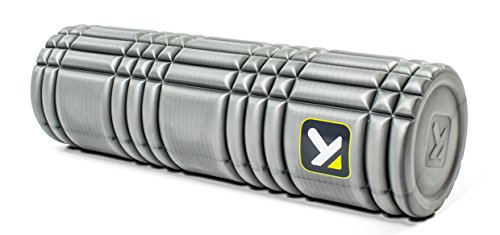
The CORE is the middle path in the TriggerPoint line: a solid EVA core with a multi-density grid pattern at medium density, so it gives you some texture without the full intensity of the GRID. The 18-inch length covers the back in sections and also handles legs, glutes, and calves, which makes it a reasonable single roller for a whole-body routine. TriggerPoint rates it for up to 325 pounds and includes access to its online instructional video library, which helps new users learn basic back-rolling positions safely.
Specs
- Length: 18 inches
- Material: Solid-core EVA foam
- Surface: Multi-density grid pattern
- Density: Medium
- Weight limit: 325 pounds
- Color: Gray
- Includes: Access to free online instructional video library
Best for: Moderate, even pressure on the back in a size that also handles legs and glutes.
Watch out for: At 18 inches it is narrower than your back, so you will reposition more often than with a 26- or 36-inch roller.
ASIN: B01BVACFAK
321 STRONG Foam Roller
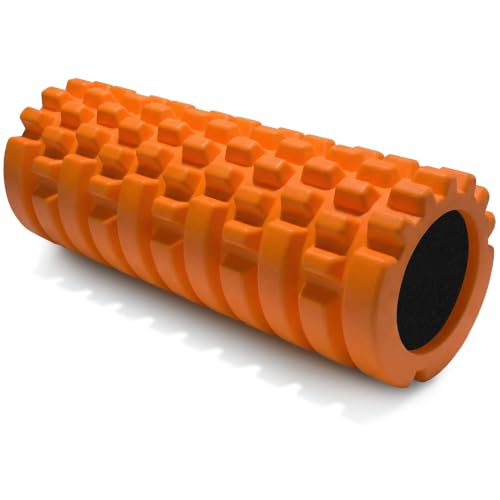
The 321 STRONG roller packs a patented three-zone textured surface into a compact body about 13 inches long. The zones use projections of different heights meant to mimic fingertips, thumbs, and palms, and the closed-cell EVA foam sits over a lightweight core at medium density. That combination suits targeted work: park it under one tight spot beside a shoulder blade and lean in slowly. The short length stores in a drawer or gym bag, and the listing includes a 4K eBook with routine ideas, which helps if you are building a rolling habit from scratch.
Specs
- Length: 12.7 inches
- Material: Closed-cell EVA foam over a lightweight core, BPA-free
- Density: Medium
- Surface: Patented three-zone textured projections
- Weight limit: 300 pounds
- Color: Orange
- Includes: 4K eBook
Best for: Digging into specific tight spots along the back in a compact, portable size.
Watch out for: The short length makes full-back rolling unstable, and the projections feel strong on bony areas such as ribs.
ASIN: B01FOS1S7G
Which One Fits Your Situation
Your back is sensitive and you are new to rolling
Start with the OPTP PRO-Roller Soft. Its soft EVA foam lets you settle onto the roller without bracing, and the 36-inch length supports your whole back while you learn basic positions. If the soft density starts to feel like it is not doing enough after a few weeks, the TriggerPoint CORE is the natural step up to medium density.
Your whole back feels stiff after desk work
Choose between the TriggerPoint GRID 2.0 and the Amazon Basics 36-inch roller. The GRID 2.0 adds firm, varied texture for backs that feel generally tight and respond well to pressure. The Amazon Basics roller is smooth and longer, better when you mostly want to lie along the spine and open up your chest after sitting.
One roller has to serve several people
The TriggerPoint GRID 2.0 is the safest shared pick. Its hollow core supports up to 500 pounds, the firmness stays consistent across users of different sizes, and the 26-inch length works for both back rolling and leg work. Softer solid-foam rollers compress faster under mixed use, so they suit a single lighter user better.
You travel or have very little storage space
Take the 321 STRONG roller. At about 13 inches it fits in a gym bag or a drawer, and its medium-density textured surface still delivers focused pressure on the spots that tighten up during travel, such as beside the shoulder blades. You give up full-back coverage, so pair it with floor stretches when you are home.
Common Mistakes
- Buying the firmest roller first, then quitting because every session feels like something to endure rather than relax into.
- Rolling with your full body weight directly on the spine or pressing hard into the lower back instead of working the muscles alongside it.
- Choosing a short 12- or 13-inch roller for full-back routines, then fighting to stay balanced on it.
- Rolling fast back and forth, which slides over tight spots instead of pausing on them long enough to let the muscle ease.
- Ignoring the stated weight limit, which flattens solid-foam rollers and shortens the life of any roller.
Frequently Asked Questions
How often should you use a foam roller on your back?
Short, regular sessions work better than occasional long ones. Many people roll for a few minutes a day or after workouts, pausing on each tight spot for a slow breath or two rather than scrubbing back and forth. If an area feels bruised the next day, ease off the pressure or switch to a softer roller.
Should you roll your lower back directly?
Use care there. Many people get more comfortable results by rolling the upper and mid back, glutes, and hips, and by keeping pressure on muscle rather than on the spine itself. Stop if you feel sharp pain, numbness, or tingling, and if back pain keeps returning or limits daily activities, a medical professional should evaluate it instead.
What size foam roller is best for back rolling?
It depends on the routine. A 36-inch roller is best for lying along the spine and for rolling across the whole back. A 26-inch roller covers the back’s width with less bulk. An 18-inch roller is the versatile middle size, and a 12- to 13-inch roller is for targeted spots, travel, and small storage spaces.
Is a textured roller better than a smooth one for a stiff back?
Neither is automatically better. Textured rollers vary the pressure with zones of different heights, which helps engage knots that a smooth surface slides over. Smooth rollers spread pressure evenly and feel more predictable, which suits sensitive backs and beginners. Match the surface to how much pressure you can relax into, not to how intense it looks.
More from Amazon
Programs that pair well with the guide above. Offers and eligibility are set by Amazon and may change.
Set up recurring deliveries of everyday items on eligible products. Terms and savings are set by Amazon.
Explore Subscribe & SaveCollect the home and kitchen items you want in one registry that guests can shop from.
Create a wedding registryFree shipping on eligible items, Prime Video and more. Eligible new members can start with a free trial.
Start a Prime free trialAudiobooks and podcasts to listen to on the go. Eligible new members can start with a free trial.
Try Audible freeAs an Amazon Associate we earn from qualifying purchases.
Write Your Review
No reviews yet. Be the first to share your experience!