

Key takeaways
- Compare the best knee sleeves for hiking by knit weight, kneecap padding, grip and sizing, with picks for day hikes, long descents and multi-day treks.
Most knees feel fine on the climb and complain on the way down, so the real decision is not whether to carry support but how much of it you want on your leg for six or eight hours. A thin knit sleeve adds warmth and gentle compression with almost no weight penalty, while a padded sleeve with grip zones trades a little bulk for a kneecap pad and a cuff that stays put on steep descents. Neither replaces a hinged brace after a serious ligament injury.
This roundup covers day hikers with achy downhill knees, backpackers carrying a loaded pack over several days, and walkers who want a matched pair for both legs. Every pick below was chosen from the product names and specifications published on its Amazon product page, including the stated size ranges, materials and included counts, so you can match a sleeve to your own measurements before ordering.
Quick Picks
As an Amazon Associate we earn from qualifying purchases.
| Product | Best for | Key spec from title |
|---|---|---|
| Bauerfeind Sports Knee Support | Long descents where kneecap tracking matters | Patellar knee pad with targeted compression |
| Incrediwear Knee Sleeve | Hikers who want a soft knit instead of neoprene | Fits 18-22 in measured above the kneecap |
| Copper Compression PowerKnit Knee Sleeve | A light spare sleeve to keep in the pack | Copper-infused knit, 2.39 ounces |
| FLYTEX Knee Compression Sleeves | Walkers who want support on both knees | Sold as a pair in sizes S to 3XL |
How to Choose
Know What a Sleeve Can and Cannot Do
A compression sleeve is a pull-on knit garment, not a medical device with hinges or straps. It warms the joint, adds a held, supported feeling around the kneecap and can make tired knees feel steadier on uneven ground. It does not lock the joint, stop sideways movement or substitute for assessment after a ligament or meniscus injury. Choose a sleeve for general aching, mild instability feelings and long descents; choose a structured brace, and professional advice, when the knee gives way or swells badly after activity.
Match Knit Weight to Miles and Weather
Fabric decides how a sleeve feels at hour five. Thin, breathable knits wick sweat and disappear under trousers or shorts, which suits warm trails and fast day hikes. Heavier knits and copper-infused or element-infused fabrics feel warmer and more substantial, which some hikers prefer on cold starts and multi-day trips where knees stiffen overnight. Neoprene holds the most heat but can feel clammy on climbs. Check the stated material on the listing, and remember that a sleeve you find comfortable is the one you will actually keep wearing.
Look at Grip Zones and Kneecap Pads
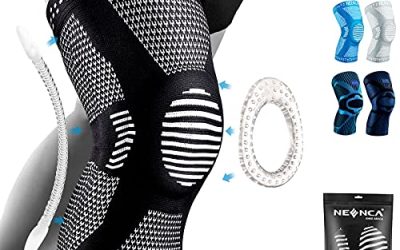
Descents are where sleeves earn their place, and two details matter most. A silicone grip band or dotted gripping zone at the top cuff keeps the sleeve from sliding down your thigh when you sweat and stride downhill. A shaped pad around the kneecap, such as a gel ring, spreads pressure and helps the cap track in its groove on steep steps. Plain tubular sleeves skip both features and cost less, but expect to pull them up more often on long, steep trails.
Size by Measurement, Never by Guesswork
Every brand measures differently, and a wrong size is the main reason sleeves disappoint. Some brands measure the thigh a set distance above the kneecap, others use the upper thigh or the leg below the knee, so read the listing’s own instructions before ordering. Measure with the knee slightly bent, write the number down, and match it to the size chart for that exact product. Between sizes, follow the maker’s guidance rather than automatically sizing down, because an overly tight sleeve can numb the leg on a long walk.
The 4 Best Options
Bauerfeind Sports Knee Support

This is the structured end of the sleeve category: a German-made compression knit with an Omega pad that surrounds the kneecap and a silicone gripping zone at the top edge to hold position on descents. The 3D AirKnit fabric is built to breathe and wick moisture rather than trap heat like neoprene, which suits hikers who want real kneecap guidance without a brace. It is sold singly and can be worn on either knee, so budget-minded walkers can start with the worse leg and add a second later if needed.
Specs
- Brand: Bauerfeind
- Model: 11449411260014
- Size: XL in the Rivera colorway on this listing; other sizes sold on the same listing
- Pad: Omega pad around the kneecap
- Grip: Silicone gripping zone at the top edge
- Knit: 3D AirKnit compression knit
- Count: 1 sleeve
- Fit: Either knee
- Material blend: not stated
Best for: Hikers whose main complaint is kneecap ache and wobble on long downhill sections.
Watch out for: Sizing uses two measurements, above and below the knee, so measure both before ordering rather than guessing from trouser size.
Incrediwear Knee Sleeve

Incrediwear takes a different route from neoprene: a soft knit of polyester, nylon, cotton and spandex that the maker embeds with semiconductor elements, sold as a single sleeve for people who find rubbery sleeves hot and restrictive. The fit is defined by the measurement above your kneecap, and this listing covers the large size in grey. There are no straps, hinges or pads, so it packs flat in a rucksack lid and pulls on in seconds at a summit or viewpoint when the descent is about to start.
Specs
- Brand: Incrediwear
- Part number: GB702
- Material: Polyester, nylon, cotton and spandex
- Size: Large in Grey on this listing, fitting 18 to 22 inches measured above the kneecap
- Count: 1 sleeve
- Package dimensions: 13.58 x 5.04 x 0.94 inches
- Closure: Pull-on
- Compression level: not stated
Best for: Multi-day walkers who want light, packable support they can wear for long hours without neoprene heat.
Watch out for: The size bands are tied to one measurement point above the kneecap, so measure exactly where the listing directs or the fit will feel wrong.
Copper Compression PowerKnit Knee Sleeve

At just over two ounces, this is the sleeve to throw in the pack as insurance even when your knees feel fine at the trailhead. The copper-infused knit wicks sweat, silicone bands help it stay in place, and there are no straps or hinges to fuss with over boots. It fits either knee, sells singly in a large and extra-large size band, and the maker positions it for mild to moderate support, which is an honest match for general trail aches rather than injury management.
Specs
- Brand: Copper Compression
- Size: L/XL on this listing, sized by the leg circumference five inches above the knee
- Fit: Right or left knee
- Count: 1 sleeve
- Item weight: 2.39 ounces
- Package dimensions: 6.65 x 4.06 x 1.06 inches
- Anti-slip feature: Silicone bands
- Material: Copper-infused knit fibers; exact blend not stated
- Care: Wash with gentle detergent and air dry
Best for: Day hikers who want the lightest possible backup sleeve for occasional downhill soreness.
Watch out for: Only two size bands cover the whole range, so legs near a boundary should compare the measurement carefully against the chart.
FLYTEX Knee Compression Sleeves

FLYTEX sells its sleeves as a pair, which removes the left-or-right decision and gives both knees the same compression on trips where the ache swaps sides by the day. The listing describes a second-skin V2 compression knit in a spandex blend, with a pull-on fit, a wide size run from small to 3XL, and an OEKO-TEX Standard 100 certification on the textile. Care is simple but specific: lay the sleeves flat to air dry and keep them away from ironing, bleach and dry cleaning so the elasticity lasts.
Specs
- Brand: Flytex
- Material: Spandex blend
- Count: 2 sleeves (1 pair)
- Size: 3XL in White on this listing; family sizes run S to 3XL
- Closure: Pull-on
- Part number: FLY
- Certification: OEKO-TEX Standard 100
- Package weight: 290 grams
- Care: Air dry flat; do not iron, bleach or dry clean
Best for: Hikers whose knees take turns aching and who would rather own a matched pair from the start.
Watch out for: Fit is set by measurement rather than clothing size, and the wrong size undermines the compression, so check the chart for your exact leg.
Which One Fits Your Situation
Day Hikes With Sore Knees on the Downhill
If your knees only complain once the trail turns downward, start with the Bauerfeind Sports Knee Support. Its Omega pad and gripping cuff address the two things that matter on descents: kneecap guidance and a sleeve that stays where you put it. The lighter Copper Compression sleeve also works here if your soreness is occasional and mild, but the padded knit is the better match when every steep mile is a negotiation.
Backpacking With a Loaded Pack
Extra pack weight multiplies knee load on every step down, so a sleeve you can wear all day matters more than maximum squeeze. The Incrediwear Knee Sleeve suits this well: no straps to dig in under a hip belt’s leg movement, a soft knit for long hours, and a flat pack size for the lid. Measure carefully before a trip, because exchanging sizes from a trail town is rarely practical.
Hot-Weather Summer Trails
Heat is the enemy of sleeve compliance. Breathable knits beat neoprene here, and the Bauerfeind’s AirKnit and the Copper Compression PowerKnit both aim at moisture management rather than warmth. The PowerKnit is the cooler, lighter carry at 2.39 ounces, and its copper-infused fibers are made to dry fast after sweaty climbs. Whichever you choose, air the sleeve at every rest stop so it dries before the next section.
Both Knees Ache by the End of the Week
When the ache alternates legs, buying singles twice gets awkward. The FLYTEX pair covers both knees in one purchase, with sizes running to 3XL for larger legs that many brands stop short of. Wearing both on the hardest descent day and one on easier days is a sensible pattern, and the spare also covers you if one sleeve is still damp from washing on a multi-day route.
Common Mistakes
- Ordering by trouser or shoe size instead of measuring the leg at the point the listing specifies.
- Expecting a knit sleeve to do a hinged brace’s job after a ligament injury or repeated giving way.
- Sizing down deliberately for a tighter feel, then dealing with numbness and tingling an hour into the walk.
- Sealing a damp, sweaty sleeve inside a pack pocket overnight, which invites odor and mildew on multi-day trips.
- Judging the fit standing still at home; check it on stairs, where bunching behind the knee shows up quickly.
Frequently Asked Questions
Can I Wear a Knee Sleeve for a Whole Day of Hiking?
Yes, most knit sleeves are designed for extended wear, and many hikers put one on at the trailhead and forget it. Comfort depends on correct sizing: a sleeve that leaves deep marks, causes tingling or needs constant pulling up is the wrong size or style. Take it off at camp, let both the sleeve and your skin dry, and check for rubbing where the cuff sits.
Should I Buy One Sleeve or a Pair?
Buy for the knees you have. If one knee consistently aches, a single quality sleeve such as the Bauerfeind or Incrediwear is enough. If the ache swaps sides or both knees tire on descents, a pair like the FLYTEX set, or two singles, gives you options and a dry spare. There is no rule that both legs must match; many walkers support only the weaker side.
How Do I Wash a Knee Sleeve on a Multi-Day Trip?
Follow the listing’s care directions: gentle detergent and air drying covers most knit sleeves, including the Copper Compression and FLYTEX picks here. In camp, rinse the sleeve in plain water, press it in a towel, and hang it from a pack strap or line overnight. Avoid wringing hard, which stretches the knit, and keep sleeves away from direct heat sources that damage elastic fibers.
When Is a Sleeve Not Enough for Trail Use?
A sleeve is the wrong tool when the knee locks, gives way repeatedly, swells sharply after modest walks, or follows a recent twist or fall. Those signs point to a structural problem that compression cannot manage, and continuing to hike on it risks a worse injury far from help. Get the knee assessed, and if support is still advised, ask whether a hinged or strapped brace fits your situation better.
More from Amazon
Programs that pair well with the guide above. Offers and eligibility are set by Amazon and may change.
Set up recurring deliveries of everyday items on eligible products. Terms and savings are set by Amazon.
Explore Subscribe & SaveCollect the home and kitchen items you want in one registry that guests can shop from.
Create a wedding registryFree shipping on eligible items, Prime Video and more. Eligible new members can start with a free trial.
Start a Prime free trialAudiobooks and podcasts to listen to on the go. Eligible new members can start with a free trial.
Try Audible freeAs an Amazon Associate we earn from qualifying purchases.
Write Your Review
No reviews yet. Be the first to share your experience!