

Key takeaways
- Compare five inverter TIG welders with digital displays, from portable 200-amp DC pulse kits to AC/DC machines built for aluminum and stainless steel.
A digital display changes how a TIG welder gets used day to day. TIG work depends on repeatable settings: amperage, pulse frequency, upslope and downslope, and, on AC machines, balance and frequency. A clear readout lets you return to the exact combination that produced a clean bead last time instead of guessing from a knob position. The other decision that matters just as much is output type. A DC-only machine handles steel and stainless well, while aluminum needs AC output to break through the oxide layer.
This guide is for home garage fabricators, small repair shops, and hobbyists who weld steel, stainless, and aluminum and want settings they can read and repeat. The five machines below are inverter TIG welders with digital displays, chosen from their Amazon titles and listed specifications, covering portable DC pulse kits, full AC/DC machines, and one model built around a wireless foot pedal.
Quick Picks
As an Amazon Associate we earn from qualifying purchases.
| Product | Best for | Key spec from title |
|---|---|---|
| YESWELDER TIG-200P ACDC | Aluminum and steel in a portable package | 200A AC/DC with large LED display |
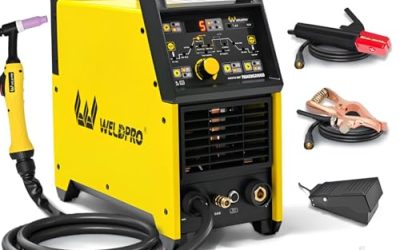
| Weldpro 200A AC/DC TIG Welder | Aluminum kits with a pedal included | 200A AC/DC pulse with foot pedal |
| ARCCAPTAIN TIG200P AC/DC | Adjustable AC waveforms for aluminum | 200A AC/DC 7-in-1 with LED display |
| AHP AlphaTIG 203Xi | Fine AC control with a wireless pedal | 200A AC/DC with LCD screen |
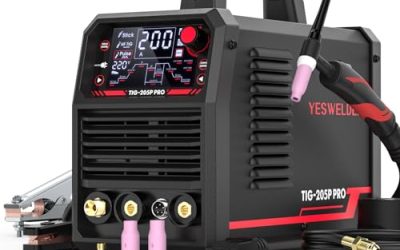
| YESWELDER TIG-205P | Thin steel and stainless on a budget | 205A DC pulse with large LED display |
How to Choose
AC or DC Output Decides What You Can Weld
Begin here, because no display or accessory fixes the wrong output type. Aluminum TIG welding needs alternating current to clean the oxide layer off the surface as you weld, so a DC-only machine leaves aluminum out of reach no matter how good its display looks. Steel and stainless, by contrast, weld well on DC, and a DC-only inverter is often lighter and simpler to set up. If aluminum is on your project list at all — trailer parts, intake piping, boat fittings — choose an AC/DC machine. If you only ever weld steel and stainless, a DC pulse machine saves weight and keeps the panel simpler.
What the Display Should Actually Show
A digital display earns its place when it shows more than amperage. On a TIG machine you adjust pulse frequency, pulse duty, upslope, downslope, pre-flow and post-flow, and on AC machines the balance and frequency of the alternating current. A display that shows the active value for each setting lets you write down a combination that worked and dial it back in next time. Look for a large, high-contrast screen you can read with a helmet nearby and gloves on. A small readout that only shows amps while the rest hides behind a shared knob is better than no display at all, but it slows down repeat work.
Duty Cycle and Output on Your Outlet
Headline amperage is only half the story, because most of these machines reach their maximum output on a 220-volt supply and deliver less on a standard household outlet. Check the output range listed for each voltage before you buy, and match it to the metal thickness you actually weld. Duty cycle is the other number that matters: it describes how many minutes of arc time the machine sustains in a ten-minute window at a stated amperage. A 25 percent duty cycle at 200 amps means short bursts at full power, while a 60 percent rating at the same output supports longer seams. Thin sheet and small brackets rarely push either limit, but long beads on thick plate will.
Torch, Foot Pedal, and What Comes in the Box
The accessories in the box change the cost of getting going. Some kits arrive with a TIG torch, a foot pedal, a gas hose, and a flow meter, while others include the torch and leave the pedal as a separate purchase, sometimes at a substantial added cost. Check the torch length too: a 13-foot torch reaches around a project car or a workbench without dragging the machine along, while a short torch keeps you close to the unit. Also confirm whether the listing includes a regulator, ground clamp, and electrode holder, and whether the foot pedal connector matches the machine. A machine with a five-pin pedal interface and no pedal included still needs one before you can control amperage hands-free.
The 5 Best Options
1. YESWELDER TIG-200P ACDC

The TIG-200P ACDC is the most versatile machine in this group, combining AC and DC TIG with pulse modes and stick welding in a 16.5-pound inverter. Its large LED display shows the active settings across seven welding modes, including AC pulse and DC pulse, and the software-controlled AC waveforms cover square, triangular, and sine output for aluminum work. Dual-voltage input switches between household and workshop outlets without a manual selector, and an auto-memory function restores your last settings after the machine powers off. The included 13-foot torch gives good reach around a project.
Specs
- 200-amp maximum output
- AC/DC TIG with pulse, plus stick and spot welding
- Large LED display with auto-memory function
- 110/220V dual-voltage input
- 13-foot WP-26 TIG torch included
- 16.47 lb machine weight
Best for: Home fabricators who weld aluminum, steel, and stainless from one portable machine.
Watch out for: The foot pedal uses a five-pin interface and is a separate purchase, so confirm the pedal before ordering.
2. Weldpro 200A AC/DC TIG Welder
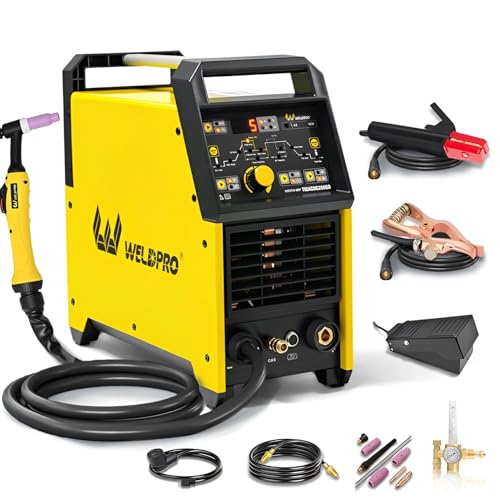
Weldpro’s 200-amp AC/DC machine is the most complete kit here, arriving with a TIG torch, a rocker foot pedal, a gas hose, and a flow meter in the box. The large LED display sits above digital controls for pulse frequency, upslope and downslope, and AC balance and frequency, so aluminum settings are visible and repeatable rather than guessed from dial positions. It runs AC and DC TIG with pulse on both, plus stick welding, from a dual-voltage supply. A 40 percent duty cycle at 200 amps supports longer beads than most machines in this group, which suits fabrication work with repeated seams.
Specs
- 200-amp maximum output
- AC/DC TIG with AC and DC pulse, plus stick welding
- Large LED display with digital parameter controls
- 110/220V dual-voltage input
- 40 percent duty cycle at 200 amps
- TIG torch, rocker foot pedal, and flow meter included
Best for: Fabricators who want a ready-to-weld aluminum kit with the pedal included.
Watch out for: The listing gives no published output limit for 110V operation, so confirm your outlet can support the work you plan.
3. ARCCAPTAIN TIG200P AC/DC

The ARCCAPTAIN TIG200P AC/DC stands out for the depth of its AC controls. The digital panel adjusts pre-flow, initial current, upslope, peak current, pulse duty, downslope, crater current, post-flow, AC frequency, and AC balance, with square and triangular waveforms for aluminum. Output runs from 10 to 120 amps on a household outlet and up to 200 amps on 220 volts, so the machine scales from thin sheet to thicker plate. The large LED display keeps those settings visible while you work, and the 13-foot torch gives room to move around a project without shifting the unit.
Specs
- 200-amp maximum output on 220V; 120-amp maximum on 110V
- AC/DC TIG with pulse, square and triangular waveforms, plus stick and spot welding
- Large LED display with digital parameter controls
- 110/220V dual-voltage input
- 25 percent duty cycle at 200 amps TIG
- 13-foot WP-26-style TIG torch included; 26.5 lb machine weight
Best for: Welders who want detailed AC waveform and pulse control for aluminum.
Watch out for: The foot pedal is sold separately, and the 25 percent duty cycle at full output means long beads need pauses.
4. AHP AlphaTIG 203Xi

The AlphaTIG 203Xi is the precision pick in this group, built around a high-visibility LCD screen and a digital control board that manages AC frequency, AC balance, and pulse in both AC and DC modes. The 2024 bundle pairs the machine with a wireless foot pedal, so amperage control follows you around the workpiece without a cord to the unit. A Nova Rotaflex torch and a floating-ball argon regulator are included, and the machine carries a three-year warranty. The wireless pedal and LCD screen make it a strong fit for a fixed bench setup where fine AC adjustments matter more than portability.
Specs
- 200-amp maximum output
- AC/DC TIG with pulse in AC and DC modes, plus stick welding
- High-visibility LCD screen with digital control board
- 110/220V dual-voltage input
- Adjustable AC frequency and balance
- Wireless foot pedal, Nova Rotaflex torch, and argon regulator included
Best for: Bench welders who want fine AC control and a cordless foot pedal.
Watch out for: The wireless-pedal bundle is a specific listing, so confirm the exact bundle and pedal in the listing before ordering.
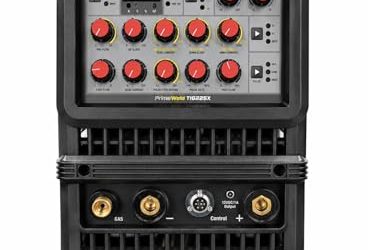
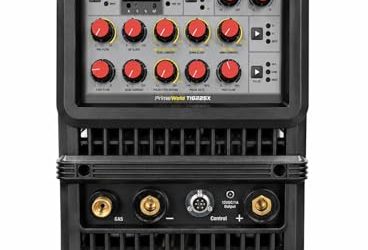
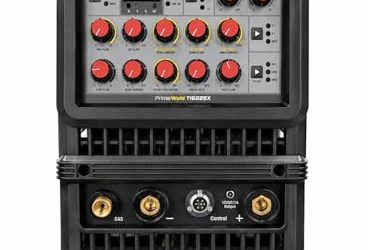
5. YESWELDER TIG-205P

The TIG-205P is the lightest machine here and the simplest choice for steel and stainless work. It combines stick, DC TIG, and pulsed DC TIG in a 10.7-pound inverter with a large LED display, high-frequency arc ignition, and an auto-memory function that restores settings after power-off. Pulse frequency runs from 0.5 to 200 hertz, which helps control heat on thin sheet and tube. A foot pedal is named in the listing, and output reaches 200 amps on 220 volts or 160 amps on a household outlet. The one hard limit is aluminum: this is a DC-only machine, so aluminum TIG work stays out of reach.
Specs
- 200-amp maximum output on 220V; 160-amp maximum on 110V
- DC TIG with pulse and stick welding; no AC output
- Large LED display with auto-memory function
- 110/220V dual-voltage input
- 60 percent duty cycle at 200 amps on 220V
- 10.7 lb machine weight
Best for: Beginners and home welders focused on thin steel and stainless.
Watch out for: DC-only output means no aluminum TIG welding, so choose an AC/DC machine if aluminum is on your list.
Which One Fits Your Situation
Welding Aluminum in a Home Garage
Pick the YESWELDER TIG-200P ACDC or the ARCCAPTAIN TIG200P AC/DC. Both run AC TIG with pulse and show settings on a large LED display, and both stay portable enough to move around a garage. The YESWELDER is lighter and simpler to set up, while the ARCCAPTAIN provides deeper waveform and pulse adjustments for welders who want to tune the arc. Either way, budget for argon gas and a regulator if they are not already in your shop.
Thin Steel and Stainless on a Household Outlet
Choose the YESWELDER TIG-205P. Its pulse control and high-frequency ignition helps keep heat under control on thin sheet and tube, and the large LED display makes it easy to return to a setting that worked. At 10.7 pounds it moves easily between the bench and a repair job, and the foot pedal gives hands-free amperage control. Just remember the DC-only limit: if aluminum appears later, this machine cannot take it on.
A Complete Kit for Fabrication Work
Take the Weldpro 200A AC/DC. It arrives with a torch, a rocker foot pedal, a gas hose, and a flow meter, so fewer separate purchases stand between the box and the first bead. The 40 percent duty cycle at 200 amps supports longer seams than the other machines here, and the digital display covers pulse, upslope, downslope, and AC balance. It is the best fit when the machine will see regular fabrication work rather than occasional repairs.
Fine AC Control at a Fixed Bench
Choose the AHP AlphaTIG 203Xi. Its LCD screen and digital control board put AC frequency, AC balance, and pulse settings in plain view, which matters when you tune the arc for different aluminum thicknesses. The wireless foot pedal removes a cord from the work area, and the included regulator means the gas side is covered. Keep it at a bench where the display and pedal get the most use.
Common Mistakes
- Buying a DC-only machine and discovering later that aluminum work needs AC output.
- Judging a machine by headline amperage alone without checking the output on a household outlet or the duty cycle at full power.
- Assuming the foot pedal is included when the listing sells it separately.
- Choosing a machine by display size alone instead of checking which settings the display actually shows.
- Forgetting the gas side: TIG welding needs argon and a regulator, so confirm what the kit includes before the first weld.
Frequently Asked Questions
Do I need AC output to weld aluminum with a TIG welder?
Yes. Aluminum carries an oxide layer that alternating current helps clean as you weld, while DC output cannot break through it reliably. A DC-only TIG welder handles steel and stainless well, but aluminum needs an AC/DC machine. If aluminum is anywhere on your project list, choose a machine with AC TIG and adjustable balance and frequency rather than planning to work around a DC-only unit later.
What does a digital display show on a TIG welder?
It shows the numbers you actually adjust: amperage, pulse frequency and duty, upslope and downslope, pre-flow and post-flow, and on AC machines the balance and frequency of the current. A large, high-contrast screen lets you read those values with gloves on and return to a combination that worked. A display that only shows amperage helps, but it leaves the rest of the settings to guesswork.
Can I run a 200-amp TIG welder on a household outlet?
Most of these machines run on a standard household outlet, but they deliver less output there than on a 220-volt supply. A machine rated at 200 amps on 220 volts may top out near 120 to 160 amps on 110 volts, depending on the model. Check the output range listed for each voltage, and match it to the metal thickness you weld before deciding whether you need a 220-volt circuit.
Do I need a foot pedal to begin TIG welding?
No, but a pedal makes TIG welding far easier to control. It lets you raise and lower amperage hands-free while the arc is running, which helps when the metal heats up mid-bead. Torch-mounted controls and panel settings can work for short welds, yet most welders add a pedal quickly. Check whether the listing includes one, since a pedal bought separately adds cost and must match the machine’s connector.
More from Amazon
Programs that pair well with the guide above. Offers and eligibility are set by Amazon and may change.
Set up recurring deliveries of everyday items on eligible products. Terms and savings are set by Amazon.
Explore Subscribe & SaveCollect the home and kitchen items you want in one registry that guests can shop from.
Create a wedding registryFree shipping on eligible items, Prime Video and more. Eligible new members can start with a free trial.
Start a Prime free trialAudiobooks and podcasts to listen to on the go. Eligible new members can start with a free trial.
Try Audible freeAs an Amazon Associate we earn from qualifying purchases.
Write Your Review
No reviews yet. Be the first to share your experience!