

Key takeaways
- Five inverter TIG welders for trade workshops compared on output, duty cycle, arc control and portability to help workshops choose the right machine.
A trade workshop needs a TIG welder that holds a steady arc through long fabrication runs, handles more than one metal, and keeps working when the bench is full and the next job is already waiting. The wrong machine shows its limits fast: thin sheet burns through, aluminum stays out of reach, or the unit trips and cools while a joint sits half finished. Output, duty cycle, arc control, and the way a machine fits the workshop floor all shape that choice, and each one matters more once welding becomes daily work rather than an occasional repair.
This guide is for trade workshops, small fabrication shops, mobile welders, and serious home-shop owners who weld steel, stainless steel, and aluminum on a regular basis. Each of the five machines below was chosen from names and specifications shown on Amazon product pages, with attention to inverter design, dual-voltage input, pulse control, and the accessories that come in the box.
Quick Picks
As an Amazon Associate we earn from qualifying purchases.
| Product | Best for | Key spec from title |
|---|---|---|
| PrimeWeld TIG225X | Mixed-metal fabrication with a generous output ceiling | 225 amp maximum TIG output |
| YESWELDER TIG-205P | Light steel and stainless work in tight spaces | 10.7 lb carry weight |
| ARCCAPTAIN TIG200P AC/DC | Aluminum and stainless jobs needing fine waveform control | 20 to 250 Hz AC frequency range |
| Everlast PowerTIG 200DV | Long fabrication runs on a fixed bench | 60 in 100 duty cycle at 200 amps |
| LOTOS TIG200ACDC | A complete AC/DC setup with pedal and regulator included | 200 amp AC/DC square-wave output |
How to Choose
Match Output to the Metal and Thickness
Maximum amperage sets the thickest material a machine can join, so begin with the jobs that fill most of the week. A 200 amp machine covers sheet, tube, and plate up to about three eighths of an inch, while 225 amps adds headroom for heavier brackets. Aluminum needs AC output and more heat than steel of the same thickness, so a DC-only machine cannot serve a shop that welds aluminum at all. Check the output on both voltages too, because a machine that gives 200 amps on 240 volts may give only 120 to 160 amps on a 120 volt outlet, and that gap changes what can be done away from the main bench.
Weigh Duty Cycle Against the Working Day
Duty cycle describes how many minutes in ten a machine can weld at a given amperage before it must cool, and it decides whether long seams flow or keep pausing. A duty cycle of 60 in 100 at full output suits steady fabrication, while 25 in 100 at full output means short runs at the top end and longer runs only at lower amperage. Shops that weld frames, tanks, and long joints should treat this figure as seriously as maximum output, because a strong machine that rests often slows the whole day. Lower amperage work lifts the duty cycle on most machines, so match the figure to the amperage actually used, not the headline number alone.
Look Closely at Arc Control and Pulse
Pulse, AC balance, and AC frequency turn a capable machine into a precise one, especially on thin material and aluminum. Pulse cycles between peak and base current, which limits heat and distortion on sheet and tube, while AC balance shifts cleaning action against penetration on aluminum. AC frequency shapes how focused the arc feels, with higher values giving a narrower bead on joints that demand care. Foot pedal control adds another layer, letting the welder ease current up and down without touching the panel. A workshop that moves between thin stainless and thick aluminum gains real value from these controls, while a shop that welds one thickness all day may need fewer of them.
Count Weight, Power, and What Comes in the Box
A bench machine can be heavy and still serve well, but a mobile welder needs a unit that lifts easily into a van and runs on the power available at the job. Dual-voltage machines accept 120 volt and 240 volt input, which opens more sites, yet full output usually needs the higher voltage. The box contents matter just as much: a foot pedal, a gas regulator, and a quality torch save separate purchases and setup time, while a missing pedal or regulator adds cost before the first weld. Measure the bench space as well, because a long unit with cables and a gas bottle needs room to breathe, and a cramped corner invites overheating and tangled leads.
The 5 Best Options
PrimeWeld TIG225X 225 Amp AC/DC TIG Welder

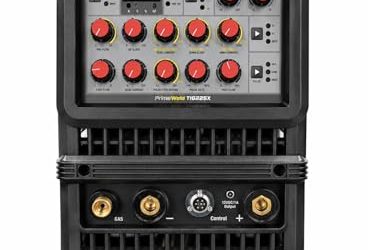
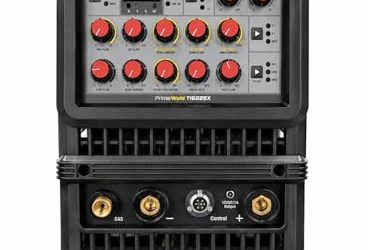
The PrimeWeld TIG225X brings the highest output in this group to shops that weld a wide mix of metals and thicknesses. Its IGBT inverter design supports AC and DC TIG plus stick welding, and the included CK17 flex-head torch with Superflex hose gives a comfortable reach around frames and awkward joints. Pulse control runs up to 200 pulses per second, and the foot pedal lets the welder shape heat during a run. Dual-voltage input suits benches with 240 volt power and sites with only 120 volt outlets, though output falls on the lower voltage. This is a strong pick for a busy fabrication shop.
Specs
- Maximum TIG output: 225 amps on 240 volt input, 140 amps on 120 volt input
- Input voltage: 120 volt or 240 volt, single phase
- Current type: AC and DC TIG, plus stick welding
- Inverter type: IGBT inverter
- Torch: CK Worldwide 17 series Superflex torch with flex head
- Pulse frequency: up to 200 pulses per second
- Controls: foot pedal and torch trigger control
Best for: A fabrication shop that welds steel, stainless steel, and aluminum across a wide range of thicknesses.
Watch out for: The control panel carries many dials, so new users should allow time to learn the settings before a live job.
ASIN: B07BXHRBQ8
YESWELDER TIG-205P 205 Amp DC Pulse TIG Welder

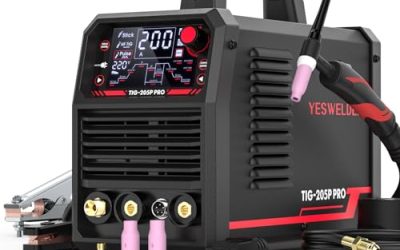
The YESWELDER TIG-205P suits workshops where space is tight and most work involves steel and stainless steel rather than aluminum. At about 10.7 pounds, it moves easily between benches, service vans, and on-site repairs, and the large LED display keeps settings visible in a dim corner of the shop. High-frequency arc ignition begins the arc without touching the tungsten, and pulse control from 0.5 to 200 Hz helps limit heat on thin sheet. Dual-voltage input accepts 110 volt and 220 volt power, with full 200 amp output on the higher voltage. Its DC-only design is the main limit to weigh.
Specs
- Maximum TIG output: 200 amps on 220 volt input, 160 amps on 110 volt input
- Input voltage: 110 volt or 220 volt, single phase
- Current type: DC TIG only, plus stick welding
- Inverter type: inverter welding machine
- Arc ignition: high-frequency non-touch arc ignition
- Pulse frequency: 0.5 to 200 Hz
- Weight: about 10.7 lb
- Display: large LED digital display
- Torch: WP-17 TIG torch included
Best for: Light steel and stainless fabrication where a compact, portable machine matters more than aluminum capability.
Watch out for: This machine is DC only, so it cannot weld aluminum, and a foot pedal is not included in the box.
ASIN: B0BVYHBQZ6
ARCCAPTAIN TIG200P AC/DC 200 Amp TIG Welder

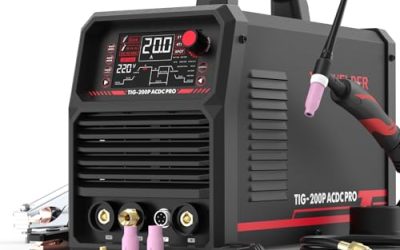
The ARCCAPTAIN TIG200P AC/DC packs detailed waveform control into a 26.5 pound unit that travels well between the bench and the job site. AC frequency adjusts from 20 to 250 Hz, AC balance from 20 to 60, and pulse runs from 0.5 to 200 Hz on DC and 0.5 to 25 Hz on AC, giving careful control over aluminum cleaning and bead shape. Square and triangular AC waveforms add further choice for different joints, and spot TIG control suits repeated tacks. Output reaches 200 amps on 220 volt input and 120 amps on 110 volt input.
Specs
- Maximum TIG output: 200 amps on 220 volt input, 120 amps on 110 volt input
- Input voltage: 110 volt or 220 volt, single phase
- Current type: AC and DC TIG, plus stick welding to 160 amps
- Inverter type: inverter welding machine
- AC frequency: 20 to 250 Hz
- AC balance: 20 to 60
- Pulse frequency: 0.5 to 200 Hz on DC, 0.5 to 25 Hz on AC
- Duty cycle: 25 in 100 at 200 amps TIG
- Weight: 26.5 lb
Best for: Aluminum and stainless work where waveform, pulse, and balance settings shape the result.
Watch out for: The duty cycle at full output is 25 in 100, so heavy work at 200 amps needs cooling breaks.
ASIN: B0C1N4J3GX
Everlast PowerTIG 200DV 200 Amp AC/DC TIG Welder

The Everlast PowerTIG 200DV is the bench anchor of this group, built for shops that weld for hours and want a machine that keeps pace. Its digitally controlled IGBT inverter delivers AC and DC TIG plus stick welding, with a duty cycle of 60 in 100 at 200 amps on 240 volt input and the same figure at 125 amps on 120 volt input. Output runs from 5 amps on DC, which suits thin material, up to 200 amps for heavier joints. A foot pedal comes in the box, and AC frequency adjusts from 20 to 250 Hz.
Specs
- Maximum TIG output: 200 amps on 240 volt input, 125 amps on 120 volt input
- Input voltage: 120 volt or 240 volt, single phase
- Current type: AC and DC TIG, plus stick welding
- Inverter type: digitally controlled IGBT inverter
- Duty cycle: 60 in 100 at 200 amps TIG on 240 volt input
- TIG output range: DC 5 to 200 amps on 240 volt input, AC 20 to 200 amps
- AC frequency: 20 to 250 Hz
- Weight: 62 lb, unit only
- Dimensions: 9 inches wide by 24 inches long by 17 inches high
- Foot pedal: included in the box
Best for: A fixed fabrication bench where long runs and a strong duty cycle matter most.
Watch out for: The unit is heavy, so moving it between sites takes effort, and a water cooler is a separate purchase for extended high-amperage work.
ASIN: B01BLUV02O
LOTOS TIG200ACDC 200 Amp AC/DC TIG Welder

The LOTOS TIG200ACDC gives a trade workshop a complete AC/DC setup with fewer separate purchases to arrange. A foot pedal and an argon regulator come in the box, alongside the TIG torch, so the machine can be set up and welding sooner after delivery. Its square-wave inverter handles aluminum on AC and steel and stainless steel on DC, with output from 10 to 200 amps and automatic dual-voltage input for 110 volt and 220 volt power. High-frequency arc ignition begins the arc cleanly, and stick output runs from 15 to 200 amps.
Specs
- Maximum TIG output: 200 amps AC/DC
- Input voltage: 110 volt or 220 volt, automatic dual voltage
- Current type: AC square wave and DC TIG, plus stick welding
- Inverter type: square-wave inverter
- Arc ignition: high-frequency arc ignition
- Stick output: 15 to 200 amps DC
- Weight: 58 lb
- Dimensions: 28 inches long by 13 inches wide by 17 inches high
- Included: foot pedal, argon regulator, TIG torch, ground clamp
Best for: A workshop that wants an AC/DC machine with pedal and regulator already included.
Watch out for: No pulse control is published, and no duty cycle figure is published, so endurance at full output is not stated on the listing.
ASIN: B00AFM33R0
Which One Fits Your Situation
A Small Shop Welding Steel and Stainless Most Days
Choose the YESWELDER TIG-205P when the work is mostly steel and stainless steel and the machine must move around the shop. Its light frame, clear LED display, and pulse control suit brackets, rails, and repair jobs, while dual-voltage input covers benches and site visits alike. Keep in mind that aluminum stays outside its range, so a shop that adds aluminum later will need a second machine.
A Fabrication Bench With Long Seams and Mixed Metals
Choose the Everlast PowerTIG 200DV when long welds and a steady pace matter most. Its duty cycle of 60 in 100 at full output, wide AC frequency range, and included foot pedal support hours of fabrication on steel, stainless steel, and aluminum. The weight suits a fixed bench or cart, and the low-end DC output handles thin material without forcing a change of machine.
Aluminum Work That Needs Fine Arc Control
Choose the ARCCAPTAIN TIG200P AC/DC when aluminum joints and thin stainless call for detailed settings. Adjustable AC frequency, AC balance, and pulse give the welder room to shape cleaning and bead width, and the 26.5 pound frame travels to the job when needed. Plan cooling breaks during long runs at full output, since its duty cycle at 200 amps is the lowest in this group.
A First AC/DC Setup Without Extra Accessory Shopping
Choose the LOTOS TIG200ACDC when the workshop wants a ready setup with pedal and regulator in the box. Its square-wave AC output handles aluminum, its DC output covers steel and stainless steel, and automatic dual-voltage input suits varied power supplies. The PrimeWeld TIG225X is the alternative here when maximum output matters more than the included accessories, thanks to its 225 amp ceiling and CK17 torch.
Common Mistakes
- Buying a DC-only machine and then discovering that aluminum work needs AC output, which the machine cannot provide.
- Judging a welder by maximum amperage alone while ignoring duty cycle, so long seams keep pausing for cooling.
- Assuming full output is available on a 120 volt outlet, when many dual-voltage machines reach their top amperage only on 240 volt power.
- Forgetting the gas bottle, regulator, filler rod, and tungsten, which are not always in the box and can delay the first weld.
- Setting pulse, balance, and frequency by guesswork on a live joint instead of practising on scrap of the same metal and thickness first.
Frequently Asked Questions
Can a 200 amp inverter TIG welder handle trade workshop work?
Yes, a 200 amp machine covers most trade workshop jobs, including sheet, tube, brackets, and plate up to about three eighths of an inch. Output on 120 volt power is lower, so heavier work needs a 240 volt circuit. Duty cycle matters as much as amperage, because long seams at full output need a machine that can sustain the run without long cooling pauses.
Do I need AC output if I mostly weld steel?
No, DC output is enough for steel and stainless steel, and a DC-only machine can serve a steel-focused shop well. AC output becomes necessary the moment aluminum enters the work, because AC cleaning breaks through the oxide layer on aluminum. A shop that expects aluminum jobs should choose an AC/DC machine from the beginning rather than adding a second unit later.
What does pulse control do on a TIG welder?
Pulse cycles the current between a peak value and a lower base value, which limits heat input and distortion on thin material. It helps on sheet, tube, and heat-sensitive stainless joints where a steady high current would burn through or warp the metal. The welder sets peak current, base current, and pulse frequency, then uses the foot pedal to shape heat during the run.
Is a foot pedal necessary for workshop TIG welding?
A foot pedal is not strictly necessary, since torch trigger modes can control the arc, but it gives finer control over heat during a weld. The welder can ease current up at the beginning of a joint and taper it down at the end, which improves crater filling and bead shape. Shops that weld varied thicknesses in one session gain the most from having a pedal in the box.
More from Amazon
Programs that pair well with the guide above. Offers and eligibility are set by Amazon and may change.
Set up recurring deliveries of everyday items on eligible products. Terms and savings are set by Amazon.
Explore Subscribe & SaveCollect the home and kitchen items you want in one registry that guests can shop from.
Create a wedding registryFree shipping on eligible items, Prime Video and more. Eligible new members can start with a free trial.
Start a Prime free trialAudiobooks and podcasts to listen to on the go. Eligible new members can start with a free trial.
Try Audible freeAs an Amazon Associate we earn from qualifying purchases.
Write Your Review
No reviews yet. Be the first to share your experience!