

Key takeaways
- Best inverter TIG welders with high frequency start for clean, non-contact arc starts on aluminum and steel — compare HF-start AC/DC inverter picks.
A high-frequency start changes the first second of every TIG weld. Instead of scratching or touching the tungsten to the workpiece, the machine sends a high-frequency spark across a small gap and the arc jumps to the metal on its own. That matters because a tungsten that touches the work picks up contamination, which makes for wandering arcs, dirty starts, and welds that need grinding out and redoing. For aluminum work, where the oxide layer already fights you, a clean non-contact start is not a luxury. It is the difference between a bead you can trust and one you have to cut apart.
This guide is for home shop welders and small fabricators who want an inverter TIG machine with a genuine high-frequency start, not a lift-arc or scratch-start workaround. Every pick below is an inverter TIG welder whose listing or maker documentation states high-frequency start. Each one also runs AC and DC output, so aluminum and steel are both on the table. The picks are chosen from manufacturer specifications and Amazon listing details. No machine here was put through weld trials for this guide, so the comparisons below rest on the published specs, the included accessories, and the documented start method.
Disclosure: As an Amazon Associate, we earn from qualifying purchases. Product details and availability can change; check the Amazon listing before you buy.
Quick picks at a glance
| Product | ASIN | Best for |
|---|---|---|
| PrimeWeld TIG225X | B07BXHRBQ8 | AC/DC aluminum and steel with a CK torch in the box |
| YESWELDER TIG-250P | B08CBD1L69 | Maximum amperage for thicker aluminum and steel |
| Weldpro TIG200ACDCGD | B084PY4C59 | Foot-pedal precision in a lighter inverter package |
What matters most for high-frequency TIG welding
A real high-frequency start, not lift arc. All three picks state HF start in their listing or maker documentation. HF start lets you hold the tungsten a short distance from the work and strike the arc without contact. Lift start and scratch start both touch the tungsten to the metal, which risks contamination. If a listing only says lift start, it does not belong in this guide.
AC output for aluminum. Aluminum needs alternating current to break through its oxide layer while you weld. DC-only machines can weld steel and stainless beautifully and cannot weld aluminum in TIG mode. Every machine here is AC/DC, so the aluminum question is settled before you buy.
Amperage range and the low end. The top number gets the attention, but the low end decides whether you can weld thin sheet without blowing through it. A machine that starts at 5 amps handles delicate work that a 20-amp minimum cannot. Check both ends of the stated range against the thinnest material you plan to weld.
Duty cycle at the amperage you will actually use. Duty cycle is the share of a ten-minute window the machine can weld at a stated amperage before it needs to cool. A 40 percent duty cycle at maximum output is normal for inverter machines in this class. What matters more is the duty cycle at the amperage your jobs need: several machines here run a 100 percent duty cycle at a reduced amperage, which covers long beads on medium-thickness work without forced pauses.
Input voltage. Dual-voltage machines run on a standard household circuit at reduced output and reach full output on a 220-volt circuit. A 220-volt-only machine needs a dedicated circuit before it welds a single bead. Decide which outlet your shop has before you fall in love with a spec sheet.
Pulse and AC controls. Pulse cycles the current between a high peak and a low background level, which limits heat input on thin material. Adjustable AC balance and AC frequency shape the cleaning action on aluminum. These controls add a learning curve, but they are the reason an AC/DC inverter earns its place over a basic DC machine.
Torch and pedal in the box. A quality torch and a foot pedal change the daily experience of TIG welding more than any single dial. The pedal gives hands-free amperage control during the weld. Check the listing for exactly what ships with the machine, because pedals and torches sold separately add cost and delay to your first weld.
PrimeWeld TIG225X

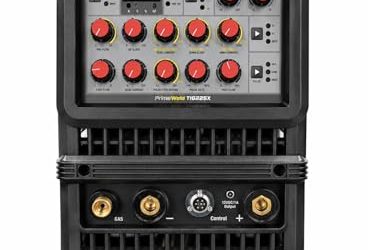
The TIG225X is the all-rounder of this guide. It pairs 225 amps of AC/DC TIG with a CK Worldwide 17-series Superflex torch, a combination that covers aluminum, stainless steel, and mild steel from one machine. The listing states high-frequency start, and the maker documentation confirms heavy-duty HF arc starting alongside pulse and AC controls.
| Spec | Detail as listed |
|---|---|
| Process | AC/DC TIG and stick |
| TIG output | 10 to 225 amps |
| Input voltage | 110/220 volts, dual voltage |
| Duty cycle | 40 percent at maximum output; 100 percent at 108 amps on 110 volts and 100 percent at 155 amps on 240 volts for AC TIG |
| Arc start | High-frequency start |
| Pulse frequency | 0.5 to 200 Hz |
| AC frequency | 40 to 200 Hz |
| AC balance | 30 to 70 percent |
| Torch | CK Worldwide 17-series Superflex torch with flex head |
| Weight | 90 pounds |
| Dimensions | 24 x 19 x 12 inches |
Why it fits: The TIG225X earns its place on its included hardware and its duty cycle figures. The CK Superflex torch is a genuinely useful piece of equipment rather than a throwaway accessory, and the flex head reaches joints a rigid torch cannot. Dual voltage means you can learn on a household circuit at 140 amps and move to a 220-volt circuit for the full 225 amps. Pulse up to 200 Hz and adjustable AC balance give you real control over heat input and oxide cleaning on aluminum.
Trade-offs: At 90 pounds, this is the heaviest machine in this guide, so plan on a cart rather than carrying it between jobs. The ten-dial control panel gives precise control and takes time to learn; a first-time TIG welder will spend an evening with the manual first. The duty cycle at maximum output is 40 percent, so long high-amperage runs need pauses.
Best for: A home shop or small fabrication setup that welds aluminum as well as steel and wants a proven AC/DC package with a quality torch. Skip if: You need to carry the welder to job sites often, or your shop only has a standard household circuit and you need full output.
YESWELDER TIG-250P

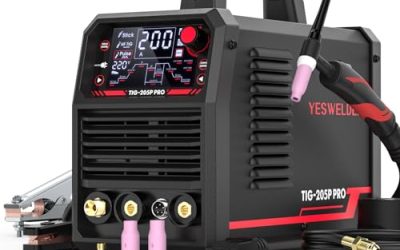
The TIG-250P brings the highest output in this guide: 250 amps of AC/DC TIG with pulse on both AC and DC. Its software-controlled square wave inverter and HF start modes cover aluminum and steel, and its 5-amp minimum TIG output reaches the thin sheet work that higher-minimum machines cannot touch.
| Spec | Detail as listed |
|---|---|
| Process | AC/DC TIG and stick |
| TIG output | 5 to 250 amps |
| Stick output | 10 to 200 amps |
| Input voltage | 220 volts |
| Duty cycle | 60 percent at 250 amps for TIG; 100 percent at 183 amps for TIG |
| Arc start | High-frequency start, AC HF TIG and DC HF TIG modes |
| AC balance | 15 to 85 percent |
| AC frequency | 20 to 250 Hz |
| Pulse | AC pulse TIG and DC pulse TIG |
| Torch | WP-26 TIG torch, 13 ft, plus WP-9 spot TIG torch |
| Trigger modes | 2T and 4T |
Why it fits: Output is the headline here, and the numbers back it up: 250 amps with a 60 percent duty cycle at full output is a stronger sustained-output figure than the other machines in this guide offer. The 5-amp minimum is equally important for the opposite end of the work, letting you weld thin gauge material without excessive heat. Adjustable AC balance from 15 to 85 percent and AC frequency from 20 to 250 Hz give fine control over the cleaning action on aluminum, and the spot TIG mode adds a useful function for sheet work and tacking.
Trade-offs: This machine runs on 220 volts only, so a dedicated circuit is a precondition, not an option. The package has no gas regulator, so argon hookup needs a separate purchase before your first weld. The digital display and deep menu reward a patient operator and can frustrate someone who wants to weld five minutes after unboxing.
Best for: A shop with a 220-volt circuit that needs the most amperage and the strongest sustained-output figure in this class, including thicker aluminum and steel. Skip if: Your shop has no 220-volt outlet, or you want the simplest possible first machine.
Weldpro TIG200ACDCGD
Weldpro TIG200ACDCGD on Amazon
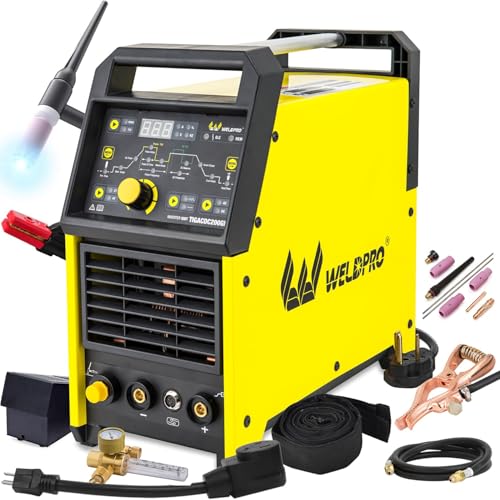
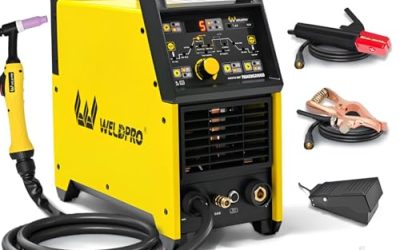
The Weldpro TIG200ACDCGD is the precision pick of the three: a 200-amp AC/DC inverter with high-frequency start on both AC and DC, full pulse control, and a foot pedal included in the box. Its power source weighs about 31 pounds, which makes it the easiest machine here to move around the shop or load onto a cart.
| Spec | Detail as listed |
|---|---|
| Process | AC/DC TIG and stick |
| TIG output | 5 to 200 amps DC; 10 to 200 amps AC |
| Stick output | 10 to 180 amps |
| Input voltage | 110/220 volts, dual voltage, auto-sensing |
| Duty cycle | 40 percent at 200 amps |
| Arc start | High-frequency TIG start |
| Pulse frequency | 0.5 to 200 Hz |
| Torch | CK17 TIG torch |
| Foot pedal | Included |
| Power source weight | About 31 pounds |
| Warranty | 3-year power source warranty as listed by the maker |
Why it fits: The Weldpro covers the core HF-start brief with the most complete out-of-box package for precision work. The included foot pedal gives real-time amperage control during the weld, which is the single most useful accessory for learning TIG. Pulse from 0.5 to 200 Hz, adjustable AC balance and AC frequency, and upslope and downslope controls let you shape the arc for thin material and aluminum. Auto-sensing dual voltage removes the manual switch between household and workshop power.
Trade-offs: The 40 percent duty cycle at 200 amps is the standard figure for this class, but it is lower than the YESWELDER’s sustained-output figure, so long beads at full power need cooling breaks. The digital menu packs many settings behind a small display, and learning it takes time. At 200 amps maximum it gives up headroom to both machines above it, so very thick material is outside its comfortable range.
Best for: Precision TIG work on thin to medium material, especially aluminum, where the foot pedal and pulse controls matter more than maximum amperage. Skip if: Your work regularly needs more than 200 amps, or you want the highest sustained-output figure available.
How to choose between these picks
Start with your outlet. If your shop has no 220-volt circuit and you cannot add one, the YESWELDER TIG-250P is out, and the choice narrows to the PrimeWeld and the Weldpro. If you do have 220-volt power, all three are in play and the decision turns on the work itself.
Next, match the amperage to your material. For thin sheet and small fabrication, all three machines cover the range, and the Weldpro’s included foot pedal and lighter package make it the natural pick. For mixed work that includes aluminum brackets, stainless exhaust pieces, and mild steel frames, the PrimeWeld’s CK torch and dual-voltage flexibility cover the widest spread. For the thickest material in this class, the YESWELDER’s 250-amp output and 60 percent duty cycle at full output are the deciding factors.
Then weigh portability against sustained output. The Weldpro moves easily and suits a welder who rearranges the shop or works in different corners of it. The PrimeWeld is a bench or cart machine that stays put. The YESWELDER is also a shop machine, and its advantage is output rather than mobility.
Finally, count what comes in the box. The Weldpro and PrimeWeld both ship with a foot pedal path covered, while the YESWELDER package needs a gas regulator added before the first weld. A pedal changes how precisely you control heat during a weld, so if your pick does not include one, plan the accessory purchase as part of the decision rather than an afterthought.
Setup and care for a high-frequency TIG welder
Argon first. TIG welding needs clean, dry, pure argon as the shielding gas. Connect the regulator and gas hose, check every fitting for leaks with soapy water, and set the flow the listing or manual recommends for your torch size. A leaking fitting wastes gas and invites porosity into the weld.
Tungsten preparation. Grind the tungsten to a point for DC steel work, and use a balled or slightly rounded tip for AC aluminum work, following the guidance in your machine manual. Keep a dedicated grinding wheel for tungsten so grinding dust from other metals does not contaminate the tip. A contaminated tungsten shows up immediately as an unstable arc.
Grounding and HF interference. High-frequency start emits a burst of radio-frequency energy when the arc strikes. Keep the work clamp on clean bare metal close to the weld, keep cables tidy, and keep the machine away from sensitive electronics. If a nearby device misbehaves when you strike an arc, move the machine or the device further apart and check your grounding.
Respect the duty cycle. Duty cycle is a cooling limit, not a suggestion. When the machine’s thermal protection trips, stop and let it cool with the fan running rather than forcing more beads. Repeated thermal trips shorten the life of the power components.
Consumables and torch care. Collets, cups, and back caps wear with use. Keep spares on hand, check the cup for cracks before each session, and replace a cracked cup before welding rather than during a job. After each session, coil the torch lead loosely instead of kinking it, and store the machine where grinding dust cannot settle into the cooling vents.
Frequently asked questions
What does a high-frequency start actually do?
It ionizes the gap between the tungsten and the workpiece with a high-frequency spark so the welding arc can jump across without the tungsten touching the metal. The arc starts cleanly, the tungsten stays uncontaminated, and you can strike an arc in tight spots where scratching the tungsten across the work would be awkward or impossible.
Do I need AC output to weld aluminum with TIG?
Yes, for practical purposes. Aluminum carries a tough oxide layer that DC cannot break through effectively. Alternating current reverses polarity many times per second, and the electrode-positive half of each cycle cleans the oxide while the electrode-negative half drives penetration. That is why every machine in this guide is AC/DC rather than DC-only.
Can I run these welders on a standard household outlet?
The PrimeWeld TIG225X and the Weldpro TIG200ACDCGD accept dual voltage, so they run on a standard household circuit at reduced output and reach full output on a 220-volt circuit. The YESWELDER TIG-250P runs on 220 volts only and needs a dedicated circuit. Check the listing for the exact input requirements of the unit you buy, and have an electrician install the circuit if your shop needs one.
What gas do I need for TIG welding?
Pure argon is the standard shielding gas for TIG welding steel, stainless steel, and aluminum with the machines in this guide. Argon-helium mixes exist for specialized work, but pure argon covers the home shop jobs these machines are built for. You will also need a regulator and flow meter, which are not included with every machine, so confirm the contents of the box before ordering.
Why does the arc start method matter for tungsten life?
Every time tungsten touches the workpiece, a small amount of tungsten transfers into the weld pool and the tip loses its shape. A contaminated or blunted tip makes the arc wander and forces you to stop and regrind. High-frequency start avoids that contact entirely, so the tungsten holds its point longer, starts stay consistent, and you spend more of the session welding and less of it grinding.
Conclusion
For most home shops, the PrimeWeld TIG225X is the safest all-round choice: genuine AC/DC output, high-frequency start, a CK torch in the box, and dual voltage. If your shop has a 220-volt circuit and your work includes the thickest material this class can handle, the YESWELDER TIG-250P gives you the most output and the strongest sustained-output figure. If precision matters more than maximum amperage, and you want a foot pedal included with a lighter machine you can move around the shop, the Weldpro TIG200ACDCGD is the pick. Whichever machine you choose, confirm the high-frequency start and the included accessories on the Amazon listing before you buy, because listings and package contents can change.
More from Amazon
Programs that pair well with the guide above. Offers and eligibility are set by Amazon and may change.
Set up recurring deliveries of everyday items on eligible products. Terms and savings are set by Amazon.
Explore Subscribe & SaveCollect the home and kitchen items you want in one registry that guests can shop from.
Create a wedding registryFree shipping on eligible items, Prime Video and more. Eligible new members can start with a free trial.
Start a Prime free trialAudiobooks and podcasts to listen to on the go. Eligible new members can start with a free trial.
Try Audible freeAs an Amazon Associate we earn from qualifying purchases.

Write Your Review
No reviews yet. Be the first to share your experience!